

Four Tips For Productive 1:1 Meetings
Countless research studies show that having regular one-on-ones with your team members is critical to your success as a manager.
One-on-one meetings provide uninterrupted time for managers and direct reports to discuss projects, review performance, and remove blockers. But with so many topics to cover in just 30-60 minutes, it’s easy for these meetings to fall short. A poorly executed one-on-one can leave employees feeling unappreciated and undervalued. To help new managers lead engaging and valuable one-on-one meetings, we’ve put together a list of tips and best practices to follow.
Read on to learn how 1:1 meetings can help you build trust, drive progress, remove obstacles and establish strong relationships with your team.

Tip 1: Hold Your 1:1s Once A Week
As a manager, you should carve out regular and dedicated time once a week to meet with your direct reports.
Opinions vary on how long a 1:1 should be, but generally somewhere between 30 and 60 minutes is ideal. This weekly meeting is the one dedicated slot for you to spend with your employee and it’s important to allocate sufficient time to your conversation.
Make sure that you show up on time and try not to cancel or rearrange your 1:1s. Consistently prioritising other meetings or work indicates that you believe something else is more important than investing time in your team, and this will erode your relationship with your employees.
Creating the routine of a weekly one-on-one is probably the most important thing you can do as a manager, to identify issues early and provide a forum for regular coaching and feedback.

Tip 2: It’s Your Employee’s Meeting, Not Yours
The primary objective of your one-on-ones with your employees is to give them a regular platform to connect with you, not the other way around.
Your employees should get to decide how they want to use their 1:1 time with you and the topics they’d like to discuss. A good rule of thumb is that you should spend 90% of the meeting covering their topics, and only 10% covering yours. It’s always a good idea to start the meeting with what’s top of mind for your team member, before moving on to what’s gone well for them in the last week, as well as checking in on their wellbeing and areas where they might need your help and support.
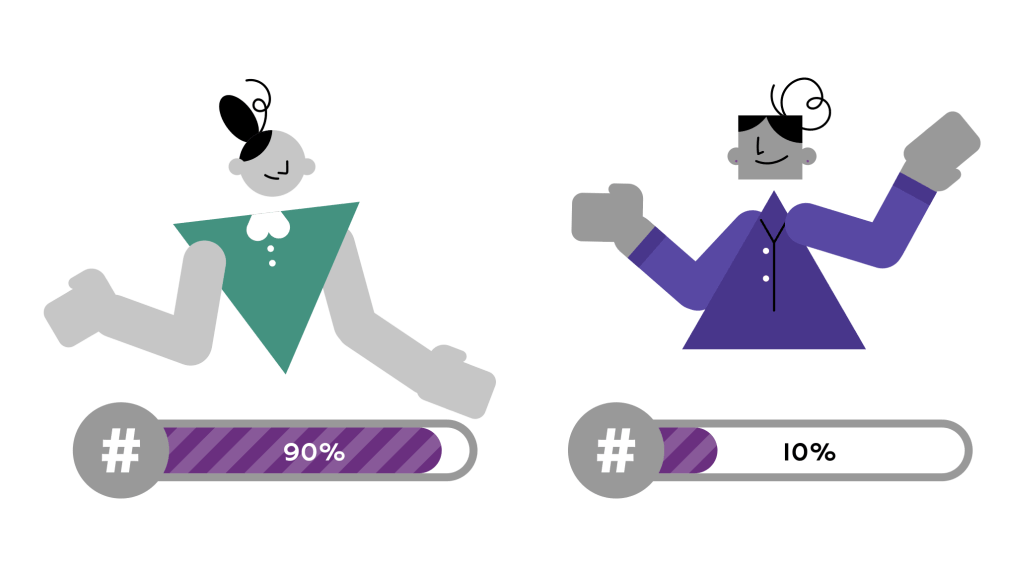
While we usually recommend using a separate session once a quarter to discuss career development (more on that in a separate video), 1:1s can also be a good opportunity to check in on your employee’s development plan and their progress against it.
Tip 3: Use A Shared Agenda Template
A great tip for your one-on-ones with your team is to use a shared document or tool that you can both access, to update your agenda, capture any notes and track action items.
There are many tools on the market for capturing notes from your 1:1s, and if you have access to one of these at your company, then they can be really helpful. However, simply attaching a shared Google Doc to your calendar invite can also be just as effective. You should encourage your employees to add to their 1:1 notes whenever something comes up that they’ll want to discuss with you in your next meeting. That way you can take a quick look at the notes ahead of your 1:1 and prepare accordingly.
Using a structured agenda for each 1:1 can be really helpful to make sure the time is as productive as possible.
Download our free template if you’re looking for some different examples on how to structure your 1:1s and suggestions of what to include in the agenda.

Tip 4: Ask For Feedback
In addition to structuring 1:1s around what’s top of mind for your employee, they are also a great opportunity to ask for feedback from your team members.
By asking questions such as “Is there anything I should be doing for you that I am not doing?” or “Is there anything I could be doing better?”, you can learn valuable insights on areas you can improve and build a culture of feedback in your team.

At first, it can make people uncomfortable when you ask them for feedback, so make sure you create enough space for them to answer your question. When they’ve finished, it’s important not to react defensively and to thank them sincerely for providing their input. The secret to building a culture of feedback with your team is to make sure that people feel that their feedback has been rewarded with action, and hasn’t been ignored or even worse, punished.
By building the habit of regular 1:1s with your employees, where they own the agenda and you listen actively, you’ll build great relationships and have a clearer idea of what’s working and what’s not working in your team.

How To Win Arguments At Work
Have you ever tried convincing someone to try your new idea, only to hit a brick wall?…

5 ChatGPT Tips For Managers (Supercharge Your Management Skills)
You’re sitting at your desk on a Monday morning. You’ve got a team meeting in 10 minutes,…

How To Be Great At Small Talk
Picture the scene. You arrive at a party or a work event, you look around the room,…
