

How To Be More Productive, By Doing Less (3 Steps of Essentialism)
Are you tired of feeling busy but not productive? Are you constantly distracted by non-essential tasks or feeling overwhelmed by your to-do list?
If so, you’re not alone.
But what if the solution was not some new productivity app or early morning wakeup routine, but that you can actually become MORE productive by doing less?

In this post, we’ll introduce you to the concept of Essentialism and show you how it can transform your productivity.
What is Essentialism?
Essentialism is a philosophy created by Greg McKeown that emphasises the importance of focusing on the things that matter most and letting go of everything else. By applying the discipline of essentialism to our everyday lives, we can become more efficient, productive and effective in our personal and professional lives.
However, essentialism is not just about doing less for the sake of doing less. Instead, it’s about doing less of the unimportant things so that we can concentrate on doing more of the things that are truly valuable to us. As Greg says in his book:
“If you don’t prioritise your life, someone else will.”
In our modern society, there is a culture of overworking and trying to have it all. We often feel the pressure to achieve everything and to be productive at all times. However, the reality is that we have limited resources, and we must make choices and trade-offs about where to allocate them.
Essentialism teaches us to embrace the fact that we cannot have it all and to focus on the few things that truly matter. Once we accept the fact that we can’t do it all, then we can start asking the question “which problem do I want to solve?”
So, how do we incorporate essentialism into our lives, and how does that make us more productive?
It all starts with the three key points of essentialism, which we’re going to look at one by one. These are: Explore, Eliminate, and Execute.
1. Explore
The first key point of essentialism is to take the necessary time to explore and evaluate your various options, before committing to any. In order to be able to determine what’s really important to us, we first need to find the time and space to focus.
When was the last time you took time out of your day to just sit and think? Can you even remember the last time that you were bored?

Nowadays, everyone turns to their phone at every available opportunity, whether they’re sitting in an airport, riding in a taxi or waiting for a friend to arrive at a restaurant. The days where we just sat and stared into space getting bored are long gone, and maybe that’s a good thing, as nobody likes being bored. But by removing the chance to get bored, we have also lost the time we used to have to sit and to think.
This has led us to become less productive, not more productive, as we get lost scrolling on our devices and bouncing from app to app, or task to task, without allocating sufficient time for deep thought.
By carving out the necessary time to focus, you can use that time to evaluate your priorities and what matters most. One way of doing this is to use extreme criteria. As you evaluate any decision or dilemma in your life, consider if this is something you absolutely must do? Is this opportunity exactly what you are looking for?
If you put your decision to an extreme test, and feel complete and utter conviction, then it’s a yes, anything else should be a no. The goal is to identify what is essential and to filter out the rest.
As the TED speaker Derek Sivers says, “It’s either a HELL YEAH! Or it’s a No.”
We’re all busy, so it can be tempting to skip this first step and not allocate the necessary time for deep focus. But by creating the space to explore, you can reflect on what is genuinely important to you, and feel confident saying “no” to everything else.
2. Eliminate
The second key point of essentialism is elimination. This involves setting boundaries, removing distractions, and staying focused on what’s essential. When we eliminate things that are not important, we create space to focus on what is.
In his book, Greg gives the example of going through your wardrobe and dividing your clothes into piles of “must keep” and “probably should get rid of”. Throwing out those old clothes isn’t easy, research has shown that we value things that we already own more highly than they are worth, and we all have a nagging voice that says “what if I want to wear it again one day in the future?”.
To overcome this, we can ask the question “If I didn’t already own this, how much would I spend to buy it?” or “What other item of clothing would I be willing to throw out in order to keep this one?”
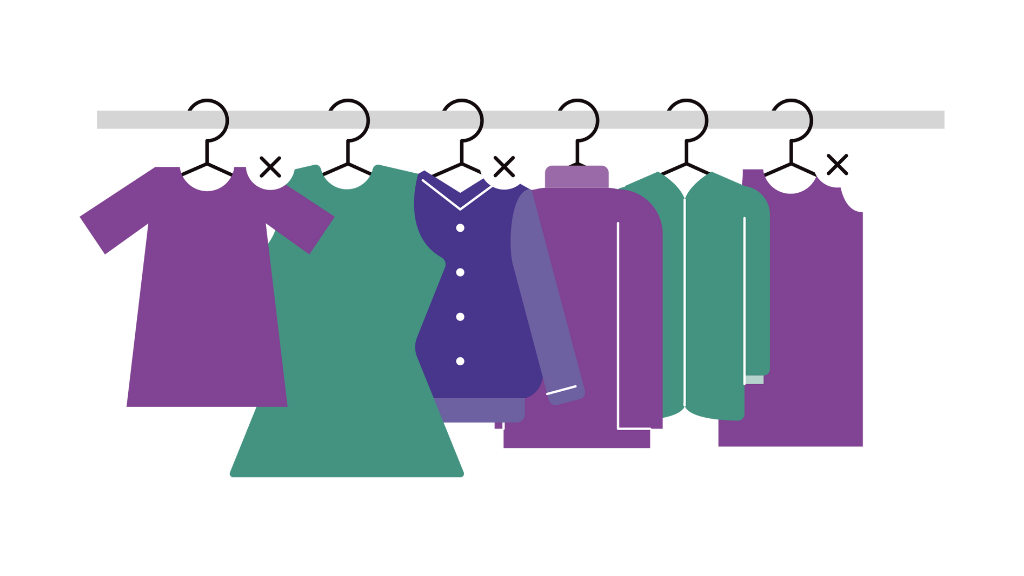
Similarly, in life, we often find it far easier to say “yes” to new opportunities, than to say “no” to activities that we’ve already committed to. This can often be because we’re getting trapped in a cycle of “sunk-cost bias” where we’re afraid of walking away from things we’ve already invested time or money in. Instead of focusing on what we want to say “yes” to, we need to learn to be comfortable saying “no” more frequently and eliminating the things in our life that are non-essential.
Consider this question: what are the things that are taking up your time and energy but not contributing to your goals or values? If they weren’t already part of your life, what would you be willing to do to acquire them?
3. Execute
The third key point of essentialism is execution. Once you’ve identified what’s truly important and eliminated distractions, it’s time to focus on executing your plan.
It’s not enough to just work out which items of clothing you want to keep in your wardrobe, and which ones to give away, you also need a system to keep your wardrobe tidy, and that system needs to be effortless and become part of your routine.
One way to achieve this is to build a buffer into your everyday activities, to prepare for the unexpected so you can adjust if necessary. Too often we assume a best case scenario and underestimate how long something will take, whether that’s driving to a new destination or completing a project or presentation. With the pace of our lives getting faster and faster, we don’t leave any room for error, which can lead to increased stress and frustration and poor execution.
Essentialism encourages us to spend the necessary time planning and preparing for any activity, as well as overestimating the time we need to complete a task, so that we have a buffer to protect against the unexpected.
Another tip for execution is to start small, encourage progress and celebrate small wins along the way. Try ideas out to see what works, create “minimal viable products” that you can get feedback on, and break larger projects into smaller tasks so it’s easier to get started.

There is something incredibly powerful about seeing our progress towards a goal, and by breaking things down we can build routines and habits that will help us achieve far more.
Essentialism is a powerful tool that can help us increase our productivity and achieve greater results. By exploring and evaluating, eliminating distractions, and executing on what’s truly important, we can make the most of our time and are more likely to achieve the things that truly matter. We only have a limited amount of time and energy, and it’s up to us to use them wisely.
So, don’t wait any longer, start implementing essentialism in your life today, and start doing less to achieve more.
How To Win Arguments At Work
Have you ever tried convincing someone to try your new idea, only to hit a brick wall?…

5 ChatGPT Tips For Managers (Supercharge Your Management Skills)
You’re sitting at your desk on a Monday morning. You’ve got a team meeting in 10 minutes,…

How To Be Great At Small Talk
Picture the scene. You arrive at a party or a work event, you look around the room,…
